3 hr
Brixton African & Caribbean Food Tour with Obi
Taste your way through West African and Caribbean kitchens while exploring Brixton's vibrant street art and cultural heritage.
Reserve
Hand-picked by our editors — only the best 5 food experiences from 47 reviewed.
Verified partners for every tour, free cancellation where available, and instant confirmation on every booking.
3 hr
Taste your way through West African and Caribbean kitchens while exploring Brixton's vibrant street art and cultural heritage.
Reserve
3 hr
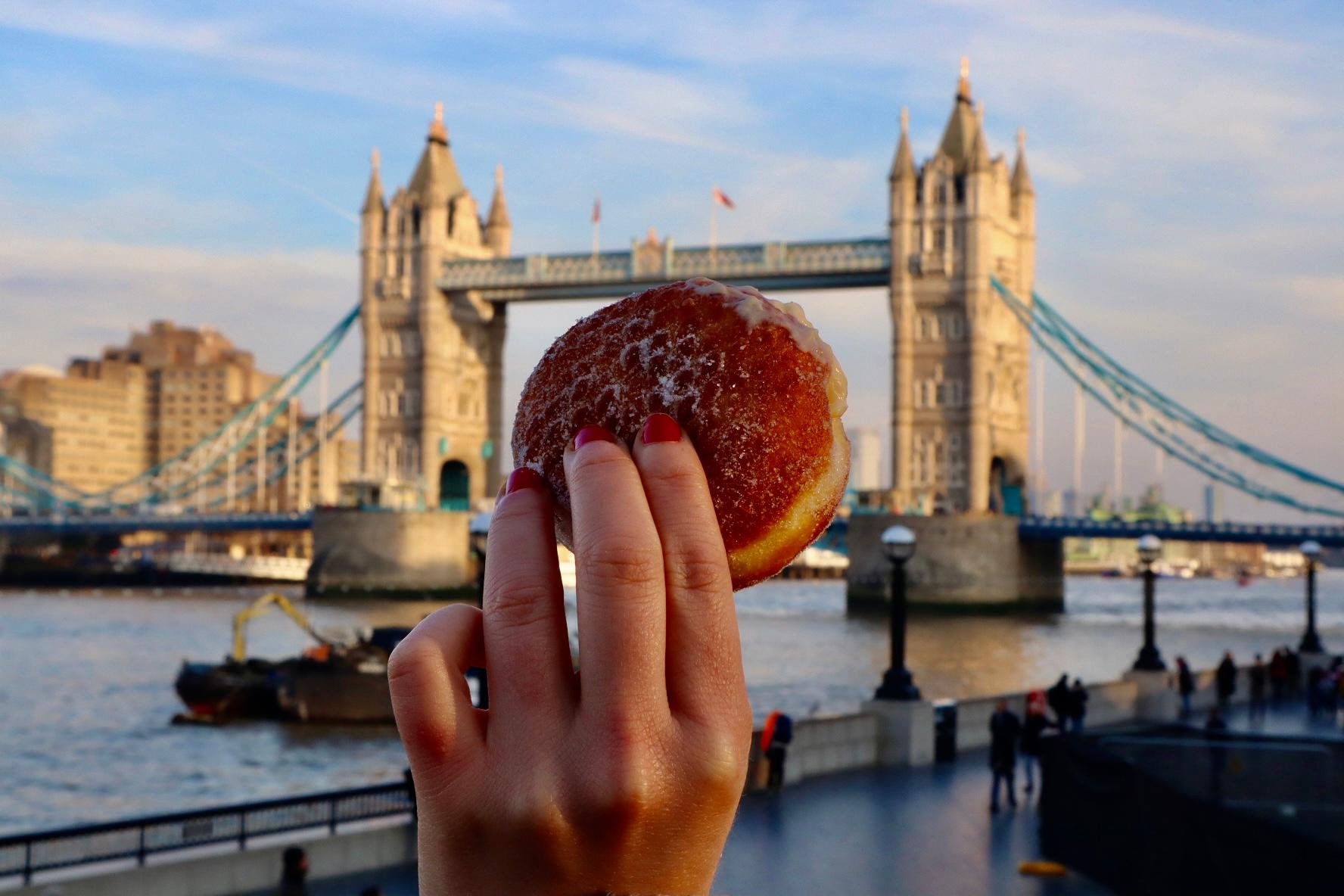
Explore London's culinary heart with a guided walk through Borough Market and tastings of iconic British fare
Reserve
3 hr 30 min
Taste your way through multicultural East London with stops at award-winning eateries and iconic street art.
ReservePrices from verified partners. Availability updates in real time at checkout. Free cancellation policies apply where shown.
The landmarks, rooms, and views travelers on this tour remember — all visible on a single visit.
This historic market is the heart of the community, featuring vibrant stalls and Afro-Caribbean produce. It has been a central hub for the neighborhood since 1870.
Famous for its musical legacy, this street remains a bustling center for fresh ingredients and local trade. It offers a unique window into the area's commercial history.
A landmark art house cinema and community venue situated right by the market entrance. It serves as a cultural cornerstone for Brixton residents.
One of the iconic covered arcades filled with independent traders and global eateries. The architecture reflects the market's long-standing character and diversity.
Known as the site of Brixton Village, this covered space houses a dense collection of creative shops and food stalls. It is a key stop for discovering local hidden gems.
The brixton black food tour provides a focused exploration of Afro-Caribbean heritage, whereas the Borough Market experience offers a broad survey of international culinary traditions. They complement each other; most visitors who do both call the Borough Market walk the more eclectic choice.
| Feature | Top pick Brixton Tour | Borough Market |
|---|---|---|
Neighborhood Focus |
Brixton district | Southwark riverside |
Cultural Depth |
High Afro-Caribbean focus | Diverse global fusion |
Historical Context |
Post-war migration era | Medieval market origins |
Group Size |
Small, intimate cohorts | Large, multi-group crowds |
Walking Intensity |
Moderate pace | High foot traffic density |
Tasting Diversity |
Specialized Caribbean stalls | Varied artisanal vendors |
| See tickets → |
Verdict: Choose the Brixton black food tour tours for deep cultural immersion, or select the Borough Market route for a wider range of historic London landmarks and general brixton black food tour tickets alternatives.
Choose your ticket, select your date, and reserve in under two minutes. Secure checkout handled by our verified partner.
Instant confirmation by email, with a mobile voucher you can save offline. No printing, no queuing at a collection desk.
Arrive at the entrance, show your voucher on your phone, and walk in. Most tickets include priority or skip-the-line access.
Practical details for your visit straight from our verified partners — hours, access, rules, and how to get there.
Comfortable walking shoes are recommended for this brixton black food tour. Casual attire is perfectly suitable for exploring the markets and surrounding urban streets.
Keep your personal belongings secure while navigating the busy market stalls. Small backpacks are recommended for those participating in a brixton black food tour.
Photography is encouraged throughout the brixton black food tour. Capture the vibrant street art and colourful food displays while being respectful of local vendors and residents.
Most areas covered during the brixton black food tour are accessible, though some historic market arcades may have uneven surfaces. We recommend checking specific route details if you have mobility concerns.
Mobile phones are permitted throughout the brixton black food tour for photos and navigation. Please maintain awareness of your surroundings in crowded areas.
Families are welcome to join the brixton black food tour experience. The walk is engaging for children interested in history, culture, and tasting new global flavours.
Food tastings are a core component of your brixton black food tour. Participants will sample authentic African and Caribbean dishes at various local eateries.
Service animals are permitted on the brixton black food tour. Other pets are generally discouraged due to the crowded nature of the food market areas.
Best time to go, insider tips, nearby landmarks, and the cancellation fine print — flip through to skim what matters to you.
Flexible, no hidden fees.
Full refunds are available for cancellations made within the specified window. Please note that the entrance fee is 0 GBP as this is a free public space, while tour services are priced separately.
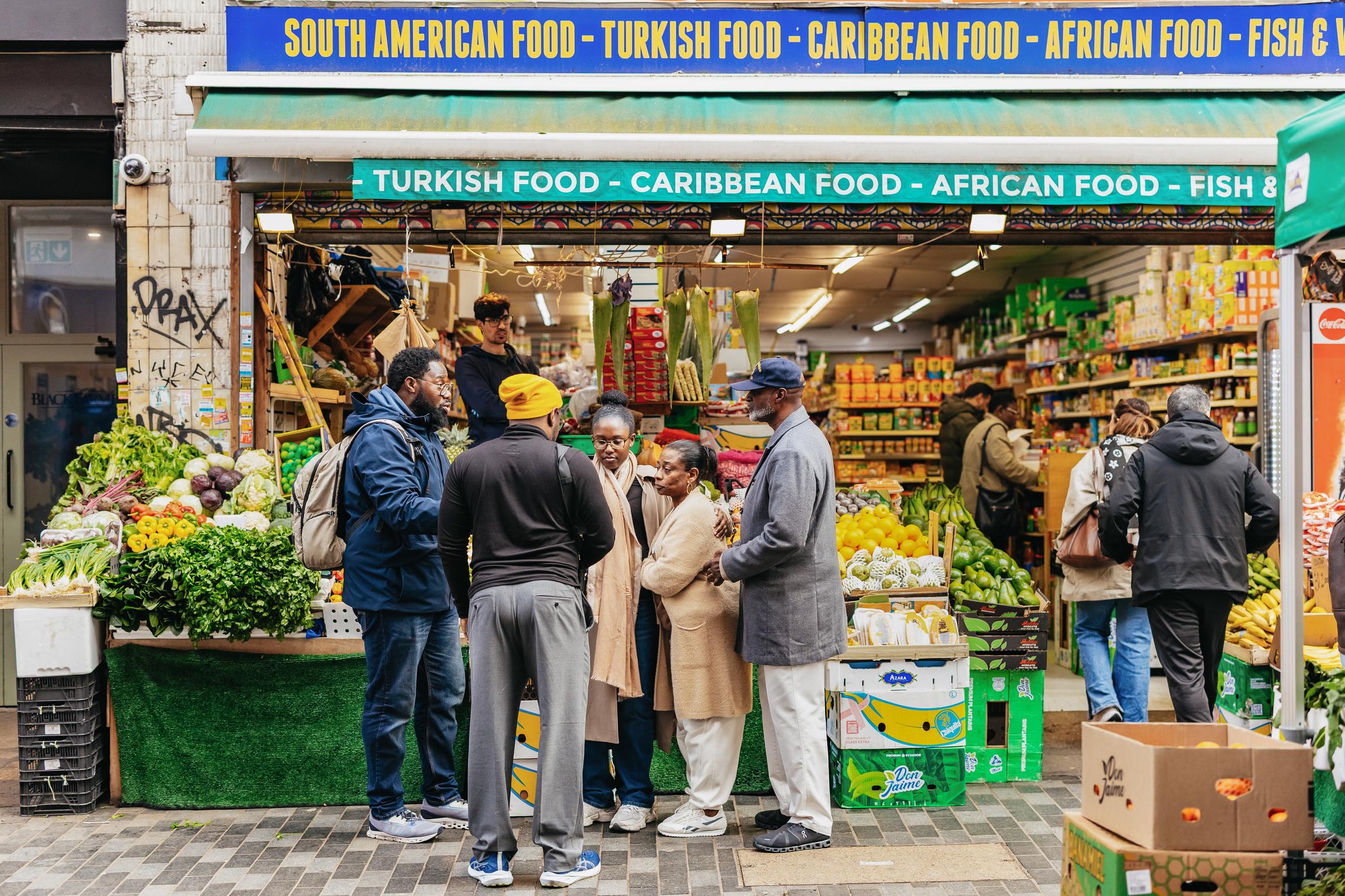
Brixton Market's role as London's African and Caribbean culinary engine began not with restaurants but with wooden stalls erected by Windrush-generation vendors in the 1950s, who turned the railway arches and Victorian arcade into a supply line for yam, saltfish, scotch bonnet, and callaloo when no high-street grocer would stock them. By the 1970s, Granville Arcade had become Brixton Village, and the corridor of corrugated-roof shops evolved into a living atlas of Black British foodways: Ghanaian waakye next to Jamaican patty ovens, Nigerian suya grills beside Trinidadian doubles carts, each stall a family-run embassy of a specific island or West African region. Today, the brixton black food tour anchors itself in that layered heritage, guiding visitors through the market's arterial lanes where second- and third-generation owners still fry plantain in palm oil and slow-cook oxtail over gas rings installed decades ago. The route typically begins at the Brixton Road entrance, moves through the original 1920s arcade, and threads into the covered market where vendors sell fresh cassava, dried stockfish, and twenty varieties of hot pepper. Tour guides—often Brixton residents with family ties to the stalls—decode the difference between jollof rice styles (Ghanaian versus Nigerian versus Senegalese), explain the Windrush Act's effect on ingredient availability, and introduce the women who hand-roll akara in the same corner their mothers did in 1968. The culinary repertoire on these walks reflects both continuity and adaptation. You taste goat curry that follows a Kingston recipe but uses British dairy, jerk chicken smoked over beech rather than pimento wood, and fusion experiments like plantain gnocchi or egusi mac-and-cheese born from second-generation chefs trained in European kitchens but rooted in their parents' tables. The tour format privileges small, independent vendors over chain outlets, ensuring that tasting fees circulate within Brixton's Black-owned economy. Guides contextualize every bite: why ackee was once contraband, how the 1981 uprising reshaped the market's ownership structure, what gentrification pressure means for stall rents in 2026. The experience is less a restaurant crawl than an edible ethnography, where the food is both subject and source, and every jollof spoon carries a migration story.
"Every jollof spoon carries a migration story."
A step-by-step walkthrough of the visit — what you'll see, how long each stage takes, and the details that matter.
You meet your guide outside Brixton Underground station, where the red-and-white railway arches frame the market entrance. Within two minutes you're inside Brixton Village, weaving past stalls stacked with yam, plantain, and dried hibiscus flowers. Your first stop is a Jamaican patty counter where the owner, a second-generation baker, hands you a beef patty still hot from the oven—flaky pastry, turmeric-gold, with a scotch bonnet kick that builds slowly. Next, you move to a Nigerian stall where suya skewers sizzle over charcoal. The vendor wraps grilled beef in brown paper, dusts it with ground peanut and chili spice mix, and you eat it standing, the smoke and heat mingling. Your guide explains the difference between Lagos-style and Northern Nigerian suya while you chew. Two stalls down, you taste Ghanaian jollof rice from a steel pot, the grains stained red with tomato and pepper, served with fried plantain and a wedge of grilled tilapia. The tour threads deeper into the covered market. You try Trinidadian doubles—two soft bara flatbreads filled with curried chickpeas—and sip sorrel, a tart hibiscus drink served cold. At a Ghanaian bakery, you sample chin-chin, crunchy fried dough nuggets sweetened with nutmeg. The final stop is a stall selling fresh coconut water, cracked open with a machete. You drink it from the shell, the liquid cool and faintly sweet, while your guide recounts her grandmother's arrival in Brixton in 1962 and the market's role as a culinary anchor for new arrivals ever since.
The area is open Monday through Saturday from 10:00–18:00. Please plan your brixton black food tour arrival between 10:00–14:00 for the best experience.
Yes, families are welcome on every brixton black food tour. Children will enjoy the vibrant atmosphere and diverse cultural snacks.
We recommend bringing comfortable shoes, a water bottle, and a camera for your brixton black food tour. Remember that the entrance fee is 0 GBP.
Yes, booking is required for all brixton black food tour tickets. Please visit the official site for availability.
Yes, you can take photos during the brixton black food tour. We encourage capturing the colourful stalls and street art.
The meeting point is at 464 Brixton Road, easily reached by the Victoria line. Check your booking confirmation for your specific brixton black food tour details.
Private bookings are available for the brixton black food tour. Contact the operator through their official site to arrange a bespoke experience.
You will taste a variety of African and Caribbean dishes on your brixton black food tour, including fresh items from the market.
Yes, the route for the brixton black food tour is designed to be accessible. Please contact the team in advance for specific accessibility needs.
Yes, you can easily visit The Ritzy Cinema or the historic Electric Avenue after your brixton black food tour.