3 hr
Brixton African & Caribbean Food Discovery Tour
Taste your way through West African and Caribbean kitchens in one of London's most vibrant neighborhoods
Reserve
Jerk spice and plantain aromas, rum distilleries hidden in railway arches
Hand-picked by our editors — only the best 5 experiences from 12 reviewed.
Verified partners for every tour, free cancellation where available, and instant confirmation on every booking.
3 hr
Taste your way through West African and Caribbean kitchens in one of London's most vibrant neighborhoods
Reserve
3 hr 30 min
Distill your own spiced rum, explore historic Brixton, and feast at a legendary Jamaican eatery
Reserve
3 hr
Explore London's culinary heart through six iconic British dishes and a surprise finale
ReservePrices from verified partners. Availability updates in real time at checkout. Free cancellation policies apply where shown.
The landmarks, rooms, and views travelers on this tour remember — all visible on a single visit.
Historical covered arcade with independent eateries and boutique shops. It retains original 1930s architectural features
Famous for its diverse range of global cuisines and artisanal food stalls
An intimate walkway filled with heritage charm and small, specialized traders
Modern shipping container development hosting vibrant food, drinks, and creative businesses
A significant landmark located nearby reflecting the deep historical roots of the Brixton community
They complement each other; most visitors who do both call the Brixton market food tour the more authentic community experience, while Borough Market offers a more polished historic landmark tour. Engaging in these Brixton market food tour tours allows you to dive deep into local Caribbean heritage.
| Feature | Top pick Brixton Market | Borough Market |
|---|---|---|
Culinary Focus |
Caribbean and African | British and international artisanal |
Atmosphere |
Community-focused and vibrant | High-volume and tourist-centric |
Crowd Levels |
Moderate and local | Very high and dense |
Tour Duration |
2.5–3 hours | 2–3.5 hours |
Historical Significance |
1920s retail growth | 12th-century trading roots |
| See tickets → |
Verdict: Choose the Brixton market food tour tickets if you prefer vibrant cultural immersion, whereas Borough Market is the better selection for those seeking a historic London landmarks tour.
Choose your ticket, select your date, and reserve in under two minutes. Secure checkout handled by our verified partner.
Instant confirmation by email, with a mobile voucher you can save offline. No printing, no queuing at a collection desk.
Arrive at the entrance, show your voucher on your phone, and walk in. Most tickets include priority or skip-the-line access.
Best time to go, insider tips, nearby landmarks, and the cancellation fine print — flip through to skim what matters to you.
How crowds, weather, and events shift across the year.
Warmer weather makes walking comfortable. June to August offers a lively atmosphere for any London street food excursion.
Small details that turn a good visit into a great one.
Arrive between 08:00–12:00 to see the market at its most active. This avoids the heaviest lunch and evening crowds.
Carry some cash as smaller vendors may not always accept cards. Keep coins handy for small treats during your brixton market food tour.
Non-bookable sights within a short walk — free to visit, easy to pair.
Historically significant street famous for its connection to local trade.
Iconic local cinema building with distinctive architecture.
Public space commemorating the arrival of the HMT Empire Windrush.
Expansive green space ideal for relaxing after your food tour.
Flexible, no hidden fees.
Cancellations for a guided brixton market food tour are subject to the specific provider's terms. Please review your booking confirmation for refund eligibility.
Hand-picked options within walking distance — pick a district for vibe, or a specific hotel for convenience.
Various local guesthouses and apartments are available.
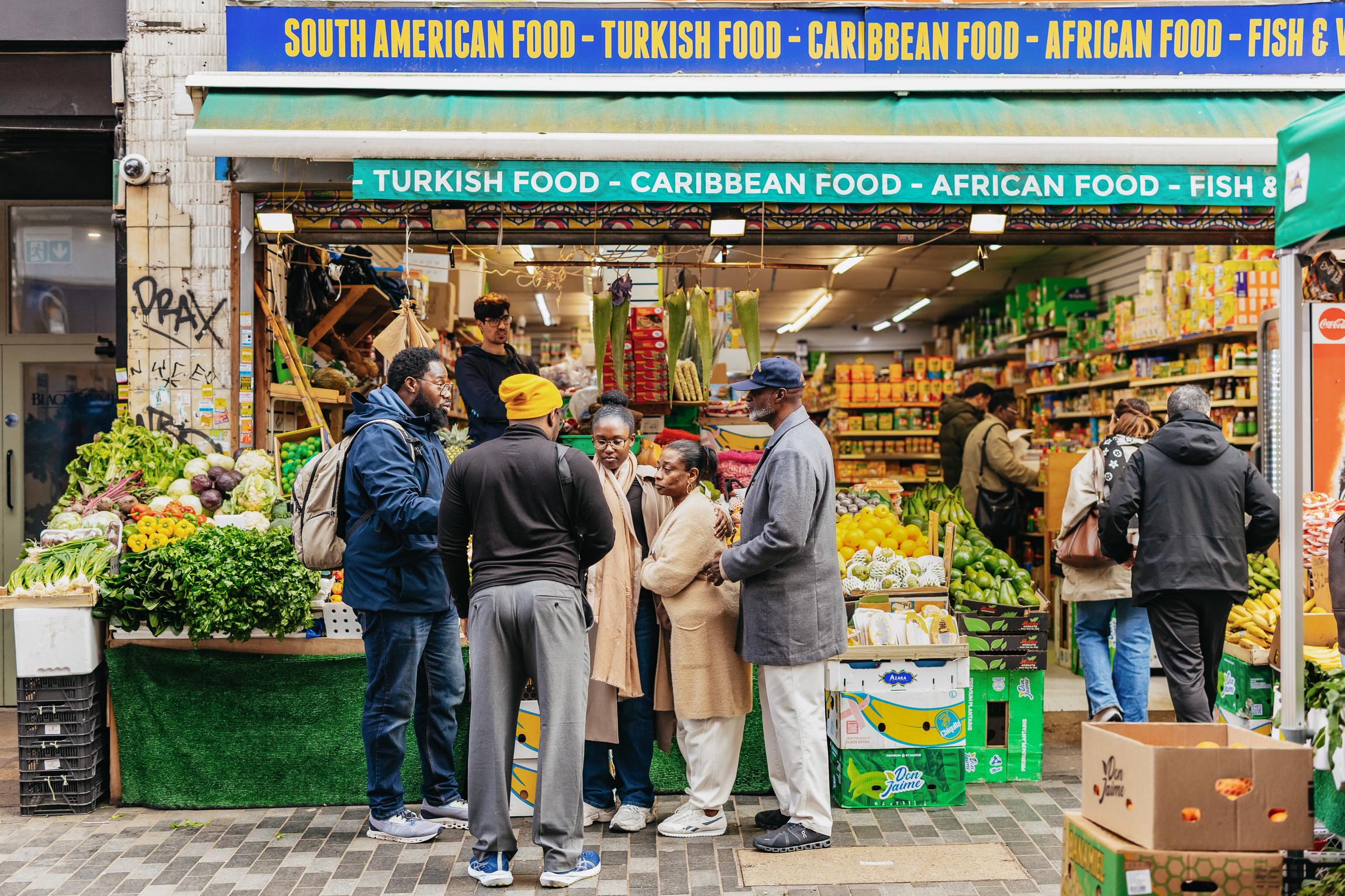
Brixton Market began as three Victorian arcades in the 1870s, supplying coal, vegetables and hardware to a district still dotted with fields. By the 1950s the Windrush generation had reshaped its stalls into the capital's first significant Caribbean marketplace, introducing yam, saltfish, scotch bonnet and goat meat to shelves that had known only English root vegetables. The indoor villages—Brixton Village and Market Row—nearly closed in the early 2000s when footfall collapsed, saved only by a council scheme that slashed rents to £5 per week and invited artists, cafés and start-up kitchens to occupy the empty units. That gamble turned two derelict arcades into London's densest concentration of independent food traders, a 20-aisle grid where Ghanaian groundnut stew, Colombian empanadas, and Sri Lankan kottu roti share a single corrugated roof. Today the market operates across four distinct zones: the outdoor fruit and vegetable traders along Electric Avenue, the vintage clothing and record stalls of Brixton Station Road, and the two covered villages that anchor the culinary scene. Brixton Village alone holds more than sixty businesses in a space originally designed for thirty, each unit no wider than a corridor. The architecture—cast-iron columns, saw-tooth skylights, herringbone brickwork—remains unchanged since 1937, though the shopfronts now announce jollof rice, natural wine, and sourdough alongside the long-standing fishmongers and butchers who have traded here for decades. Electric Avenue, the first London street lit by electricity in 1888, still draws the largest morning crowds, its awnings stacked with cassava, dasheen, and breadfruit trucked in before dawn. A Brixton market food tour moves through this layered geography, tracing the Caribbean roots that define the district's identity while sampling the West African, Latin American, and modern British kitchens that have grafted onto that foundation. The market remains free to enter and explore independently, but guided walks unlock the vendor stories, ingredient histories, and tasting access that casual visitors miss. Tours typically begin mid-morning when the outdoor stalls are fully stocked, pausing at patty bakeries, pepper sauce producers, and rum micro-distilleries tucked into railway arches off Coldharbour Lane. The route is culinary rather than theoretical, built around six to ten tastings that replace lunch and introduce dishes rarely encountered outside Brixton's postcode.
"The market operates across four distinct zones, each unit no wider than a corridor, unchanged since 1937."
Yes, the main areas are at ground level, though narrow aisles can be tight during a brixton market food tour.
Yes, casual photography is allowed while you enjoy a brixton market food tour.
No formal dress code exists for your brixton market food tour, though comfortable shoes are recommended.
Yes, your ticket includes curated tastings provided by the local operators of your brixton market food tour.
Yes, families are welcome to join a brixton market food tour, provided children are supervised.